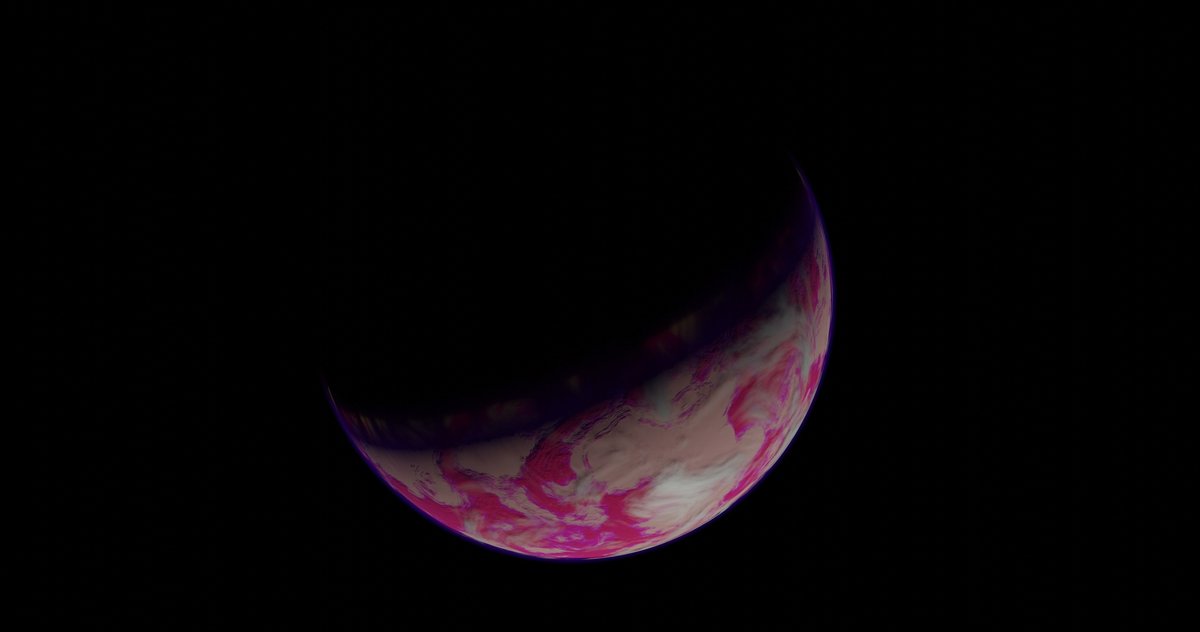
In the grand tapestry of fictional worlds, every detail weaves together to create an immersive experience. Yet, few elements hold as much quiet power as the names we bestow upon the celestial bodies that anchor these realities. Integrating Planet Names into Fictional Worlds & Lore isn't merely about slapping a cool-sounding word onto a cosmic map; it's about crafting an identity, whispering histories, and setting the stage for epic tales. A well-chosen planet name can instantly transport your audience, hinting at the very essence of a world before a single line of descriptive text is even read.
It's the first step in painting a universe, whether you're building a sprawling galactic empire, a mystical fantasy realm, or a gritty sci-fi setting. This isn't just a task for sci-fi writers, but for anyone looking to add depth to their narratives, games, or even tabletop RPG campaigns.
At a Glance: Crafting Stellar Planet Names
- Names aren't just labels: They're narrative shorthand, hinting at a world's nature, history, or inhabitants.
- Draw broad inspiration: Look to mythology, real-world astronomy, or create entirely unique linguistic roots.
- Match name to world: A fiery planet needs a different feel than a lush utopia.
- Blend sounds and syllables: Experiment with existing words, languages, and invented sounds for distinct results.
- Keep it memorable: Aim for pronounceable names that resonate and stick with your audience.
- Utilize naming conventions: Establish a style guide for your universe to ensure consistency.
Beyond the Map: Why Planet Names Are Lore Engines
Imagine "Earth." What comes to mind? Life, diversity, human history. Now imagine "Xenon." Instantly, you conjure images of the alien, the unknown, perhaps a gas giant or a world teeming with strange creatures. That's the power of a well-chosen name. It's more than just a label; it's a compressed story, a hint of atmosphere, a foundational piece of your world's lore.
For writers, game designers, and world-builders, unique planet names are critical for establishing identity and distinguishing one cosmic location from another. They can be descriptive, evocative, or mysterious, designed to reflect everything from geography and climate to its dominant culture or its ultimate destiny. The careful selection of these names adds immeasurable depth, helping audiences visualize and connect with your fictional universe on a profound level.
Finding Your Cosmic Muse: Pillars of Inspiration
Where do you even begin when faced with an infinite void of possibilities? The key is to open your mind to diverse sources, then filter them through the specific needs of your world. Think of it as having several distinct toolkits, each designed to evoke a different kind of celestial vibe.
1. The Descriptive & Thematic Toolkit
Sometimes, the simplest approach is the most effective: naming a planet for what it is or what it represents. These names are often immediately intuitive, giving your audience a clear mental image from the outset. They act as shorthand, telling a story with just a word.
- Stellara: Evokes shimmering crystals or a star-filled sky. Perhaps it's a planet powered by crystalline energy.
- Xenonia: Suggests alien creatures, unknown biomes, or a realm hostile to outsiders.
- Aquaria: Instantly paints a picture of water-covered cities, vast oceans, or a world reliant on aquatic life.
- Volcanis: Fiery, lava rivers, constant geological turmoil. A planet of danger and raw power.
- Crystaline: Similar to Stellara, but perhaps more focused on the crystals themselves as an energy source or geological feature.
- Verdantia: Lush forests, harmony with nature, a vibrant ecosystem. A potential paradise or a world reclaimed by flora.
When you're crafting a world where a planet's primary characteristic is central to its identity or plot, a descriptive name acts as a strong narrative anchor. It cuts straight to the point, creating an immediate, undeniable connection between name and nature.
2. Celestial Monikers: Tapping into Real-World Wonder
Our own night sky is a treasure trove of inspiring names. Drawing from real-world celestial objects and astronomical terms lends a sense of grandeur and familiarity, grounding your fictional worlds in a touch of reality. These names often carry an inherent awe, a connection to the vastness of space that audiences already recognize.
- Aurora: The beauty of the polar lights, perhaps a world of shifting, colorful skies.
- Nebula: Evokes cosmic clouds, creation, or perhaps a planet shrouded in atmospheric mystery.
- Sirius: A bright star, suggesting importance, brilliance, or a central hub in your galaxy.
- Andromeda: A galaxy, implying vastness, a complex system, or a distant, ancient civilization.
- Luna: Latin for moon, easily repurposed for a primary moon or a planet with a lunar-like appearance.
- Orion: A powerful constellation, hinting at heroism, hunting, or a warrior culture.
- Vega: A bright star, similar to Sirius, suggesting significance or a navigational landmark.
- Galaxia: A grand title for a major world, or one central to a galactic empire.
- Polaris: The North Star, indicating a guiding light, a fixed point, or a place of pilgrimage.
Using these established terms immediately provides a subconscious gravitas, leveraging centuries of human wonder at the cosmos. However, be mindful not to use them too literally if your world has very different characteristics; a planet named "Mars" that's a lush jungle might confuse rather than intrigue.
3. Grand Titles & Extraterrestrial Flair
Sometimes, a planet demands a name that feels epic, alien, or simply awe-inspiring. These titles often combine familiar words in new ways or lean into a more majestic, almost poetic cadence. They speak of cosmic significance, ancient power, or breathtaking beauty.
- Glorious Nebula: A world of ethereal beauty, perhaps home to sentient energy or shrouded in colorful mists.
- Cosmic Jewel: A rare and valuable planet, perhaps rich in resources or a site of unique biological diversity.
- Stellar Haven: A sanctuary, a paradise, or a hidden world sought by many.
- Celestial Oasis: A life-sustaining world in an otherwise barren expanse, a refuge.
- Galactic Genesis: A planet of origin, where life began, or a site of monumental importance.
- Interstellar Infinity: A world so vast or ancient that it seems without end, perhaps a hub of infinite knowledge.
These names are fantastic for major plot points, ancient homeworlds, or locations with immense symbolic value. They elevate the planet beyond a simple point on a map, transforming it into a concept.
4. Mythological Designations: Echoes of Ancient Lore
Mythology, from across cultures and time, offers a rich vein of names steeped in story, emotion, and established archetypes. By drawing on these, you infuse your planet with an instant layer of symbolic meaning, pre-loading it with centuries of associated lore. This can be a powerful shortcut for world-building, as audiences often instinctively understand the connotations. You might even find yourself naturally drawing on mythological inspiration to inform the inhabitants or history of such a world.
- Olympus: Suggests power, majesty, a home of gods or an untouchable elite.
- Asgard: Evokes strength, valor, a warrior society, or a stronghold against chaos.
- Avalon: Implies magic, wisdom, a hidden realm, or a place of healing and ancient secrets.
- Elysium: A paradise, a land of the blessed, or a utopian society.
- Valhalla: A hall of heroes, a final resting place for warriors, or a world of constant battle and honor.
- Atlantis: An advanced, perhaps lost, civilization; technology beyond comprehension, or a watery realm.
- Arcadia: Utopian harmony, pastoral beauty, or a society living in perfect balance with nature.
- Eden: Pristine, untouched, the birthplace of something pure, or a garden world.
- Midgard: A human realm, a world like our own, or one that bridges multiple realities.
- Tartarus: Punishment, darkness, a place of torment, or a desolate, dangerous world.
When using mythological names, consider the precise associations. Is your "Olympus" a truly divine realm, or a corporate citadel built by ruthless titans? The contrast can be just as compelling as the direct correlation.
5. Futuristic Labels & Synthesized Sounds
For worlds steeped in advanced technology, cybernetics, or purely scientific endeavors, names that sound invented, sleek, or digitally inspired can be highly effective. These often utilize sharp consonants, unusual letter combinations, or suffixes that evoke a sense of the cutting-edge.
- Astralax: Sounds like a complex, perhaps manufactured, world; astronomical and technological.
- Nova Prime: "Nova" implies newness or a stellar explosion; "Prime" suggests importance, originality, or leadership.
- Electronia: A world of pure energy, advanced computing, or a society powered by electricity.
- Nebulon: Combines cosmic "nebula" with a metallic, artificial suffix, suggesting a synthetic world in a cosmic setting.
- Xenos: Greek for "stranger," often used in sci-fi for alien races, perfect for an unknown or foreign world.
- Quantumia: A world of advanced physics, reality manipulation, or one where scientific discovery is paramount.
- Cyberspace: If a planet is more digital than physical, or its reality is projected, this could fit.
- Futuris: A straightforward name for a forward-thinking, advanced civilization.
These names are fantastic for worlds that feel distinctly different from our own, highlighting technological advancement or entirely new forms of existence.
6. Otherworldly Nicknames: Evoking Mood and Mystery
Sometimes, a planet's identity is best captured by a name that hints at its atmospheric quality or its core enigma. These names lean into mood, emotion, and a sense of wonder or foreboding.
- Celestia: Suggests ethereal beauty, a heavenly realm, or a world of light and grace.
- Nova: Implies constant change, evolution, or a world born from a cataclysmic event.
- Nebulon: (re-appears, showing versatility) Can also evoke colorful nebulas, a world of shifting atmospheric hues, or a place of natural wonder.
- Elysium: (re-appears) A classic for paradise, also fits the "otherworldly" feel.
- Shadowrealm: A world of perpetual darkness, mystery, or a place associated with malevolent forces.
- Pandora: A world of wonders and mysteries, but also potential dangers, echoing the myth.
These nicknames are potent because they appeal directly to the imagination, creating an emotional landscape before any physical description.
Tailoring the Name to the World: Environment as Your Guide
The very first step in crafting the perfect planet name should always be to consider its environment and type. A gas giant will rarely be named "Verdantia," just as an ice world probably won't be called "Volcanis." The name should resonate with the planet's core identity, helping to build a cohesive and believable universe.
Consider these common planet types and how their characteristics might inform their names:
- Terrestrial Worlds (e.g., Earth-like, habitable): Names like Solara (sunny, vibrant), Verdantia (lush, green), Tellus (Latin for Earth, grounded), or Aethelgard (Old English, noble protection) suggest life, warmth, and potentially familiar ecosystems. These names often hint at habitability and a nurturing environment.
- Gas Giants (e.g., Jupiter-like, massive atmospheres): These planets demand names that convey immense scale, stormy atmospheres, or a sense of gaseous fluidity. Zephyros (Greek god of the west wind, airy), Jovion (echoes Jupiter), Aeolara (windy), or Turbulo (turbulent) fit well. Names here often evoke meteorological phenomena or immense, unyielding forces.
- Ocean & Water Worlds (e.g., covered in water, deep seas): Naturally, names here should reflect the aquatic nature. Oceara (oceanic), Maris (Latin for sea), Hydroxia (water-rich), or Thalassia (Greek for sea) come to mind. These worlds might suggest mystery, serene beauty, or terrifying deep-sea creatures.
- Ice & Frozen Worlds (e.g., tundras, glaciers, eternal winter): Names should convey coldness, starkness, or a beautiful but harsh environment. Glaciera (glacier), Frostrune (frosty mysteries), Cryos (cold), or Borealis (northern) are strong candidates.
- Desert & Arid Worlds (e.g., vast sands, scorching heat, barren lands): These planets typically feature names that evoke dryness, heat, or desolation. Saharos (echoes Sahara), Dunara (dune-like), Xerxes (arid), or Calamia (calamity, barrenness) work well.
- Exotic & Fantasy Worlds (e.g., magic, unique geology, impossible biomes): This category is where creativity truly unbound. Names like Mythara (mythical), Celestalis (celestial, ethereal), Arcanum (mystery), or Aetheria (upper air, spirit) are ideal. These names often hint at supernatural elements, unique physical laws, or wondrous phenomena.
By aligning your planet's name with its fundamental nature, you build a consistent and believable universe. It ensures that the first impression a name makes is an accurate one, enhancing immersion rather than breaking it. If you're struggling to visualize your world's physical traits, exploring concepts like geographical considerations in world-building can provide a great framework.
The Art of Construction: How to Build Your Perfect Planet Name
Beyond choosing an inspirational category, there's a practical science to constructing names that sound authentic and impactful. This involves blending roots, adding prefixes/suffixes, and ensuring they roll off the tongue.
- Start with the Core: Environment & Type: As discussed, this is your foundational step. A planet of active volcanoes demands a different sound profile than a tranquil, forested moon. Let the world itself dictate the initial feeling.
- Roots of Language: Mythology, Astronomy, Nature: Dive into Latin, Greek, Old English, Sanskrit, or other ancient languages. These offer a rich lexicon of evocative root words.
- Examples:
Aqua(water),Terra(earth),Sol(sun),Luna(moon),Ignis(fire),Astro(star),Chrono(time),Xeno(alien),Verd(green).
Using these roots for crafting unique sci-fi names can lend an air of gravitas.
- Mix, Match, Mangle, Invent: Don't be afraid to combine words from different languages or invent entirely new syllables.
- Example:
Aqua+Terra=Aquaterra(a watery earth).Sol+Nova=Solnova. - Try rearranging letters, dropping vowels, or adding consonants for unique sounds.
Planet generatorcould becomePlagenororNeterpla. - Experiment with sounds you like. "Z", "X", "V", "Q" often sound more alien or futuristic.
- Descriptive Elements: Prefixes & Suffixes: These additions can subtly shift the meaning, importance, or type of your planet.
- Prefixes:
Prime(primary, first),Neo(new),Xen(alien),Astra(star),Hyper(above, beyond),Mega(large). - Suffixes:
-ara: Evokes beauty, often feminine (Stellara, Aquara).-ion: Suggests grandeur, a place of significance (Jovion, Olympion).-os: Often masculine, ancient, or powerful (Saharos, Xenos).-ia: Common for lands, territories (Xenonia, Electronia).-um: Implies a place, often a paradise or a specific location (Elysium, Quantum).-is: Sharp, definitive, sometimes exotic (Volcanis, Maris).-or: Can imply origin or a characteristic (Creator, Solor).- Combine:
Sol+Prime=Sol Prime.Aqua+-ara=Aquara.Xen+-os=Xenos.
- Inject Story & History: The most resonant names often hint at a planet's past, its unique features, or a pivotal event.
- Was it once a vibrant world now barren?
Calamity's End. - Is it the site of an ancient battle?
Ares' Folly. - Is it known for a specific resource?
Gemini's Vein. - A planet known for a certain creature might bear its name, like
Dragon's Maw.
- The Pronounceability & Memorability Test: A fantastic-sounding name is useless if no one can say it or remember it.
- Say the name aloud. Does it flow? Is it a tongue-twister?
- Is it too similar to another name in your world?
- Can your audience easily grasp it? Don't be afraid to simplify or slightly alter complex names for better recall.
- Consider the cadence and rhythm. Short, sharp names for harsh worlds; lyrical names for beautiful ones.
- Learn from the Masters: Real Exoplanets & Classic Sci-Fi:
- Exoplanets: Browse databases of real exoplanets (e.g., Kepler-186f, WASP-12b). While often technical, they inspire scientific realism and alphanumeric combinations.
- Sci-Fi Classics: Dune's "Arrakis," Star Wars' "Tatooine," Star Trek's "Vulcan." Analyze why these names work. They often combine unique sounds with subtle hints of character.
- Remember, your universe doesn't exist in a vacuum. Other media can be a valuable source of inspiration, but ensure your creations are distinct and serve your unique vision.
Beyond the Label: Weaving Names into Deep Lore
A planet's name isn't just a point on a map; it's a seed from which entire narratives can sprout. Integrating these names deeply into your world's lore means allowing them to influence culture, history, language, and even character names.
Cultural & Linguistic Echoes
If a planet is named Ignis (from Latin for fire), perhaps its primary language has Latin roots, or its inhabitants have fiery tempers, or their mythology revolves around a fire god. If it's Verdantia, perhaps their names are nature-based, like Leaf or River, and their architecture is organic. The planet's name becomes a cultural touchstone. Consider how this impacts character naming conventions as well – a character from a harsh desert world might have a short, punchy name, while one from an ethereal, ancient planet might bear a more melodic, multi-syllabic title.
Historical Significance
A planet called The Veil might imply a world that was once hidden, or whose history is shrouded in mystery. First Light could be the homeworld of a civilization, or the planet where a pivotal historical event occurred. The name itself can be a clue, a historical artifact. Was Elysium always a paradise, or did it earn that name after a devastating war transformed it?
Prophetic & Symbolic Weight
Names can carry immense symbolic weight, foreshadowing events or defining a planet's destiny. A world named Pandora might indeed unleash unforeseen troubles. Terminus could be the end of a journey or the final stand. These names imbue your planets with a destiny, making them active participants in your story, not just settings.
Naming Systems and Conventions
Consistency is key for believability. Does your universe use a particular system for naming?
- Sector-based:
Sector Gamma-7, Planet Xylos-IV. - Cultural: All planets named by the K'tharr Empire begin with
K'. - Astronomical: All gas giants end in
-os, all terrestrial worlds end in-a.
Establishing such conventions, even subtly, makes your universe feel more robust and thought-out. It adds another layer of realism, whether your goal is map-making for fantasy worlds or charting star systems.
Common Pitfalls to Sidestep
Even seasoned world-builders can stumble. Be mindful of these common mistakes when naming your planets:
- The Tongue-Twister: Names that are difficult to pronounce or have awkward letter combinations will pull readers out of your world. Aim for a flow that feels natural, even if the word itself is alien.
- The Generic Placeholder: Avoid names that sound like they came from a random word generator (unless that's your specific aesthetic). "Planet X" or "System 7" usually lack the evocative power you're striving for, though they might serve as temporary designations.
- The Unintentional Joke: Be careful of names that sound too similar to real-world objects, brand names, or slang that could unintentionally create humor or confusion.
- The Overly Complex: While depth is good, a name shouldn't require a paragraph of explanation to be understood. Its essence should be largely conveyed by the name itself.
- Clashing Tones: A planet named "Fluffy Rainbow Land" in a grimdark sci-fi setting, without intentional irony, will break immersion. Match the tone of your names to the tone of your world.
Harnessing the Power of Tools: Planet Name Generators
Sometimes, you need a spark, a starting point, or just a different angle. This is where tools like Our planet names generator can be incredibly useful. These tools often allow you to specify categories like:
- Terrestrial: For Earth-like or rocky planets.
- Gas Giant: For massive, gaseous worlds.
- Ocean & Water World: For planets covered in liquid.
- Ice & Frozen: For worlds of perpetual cold.
- Desert & Arid: For dry, sandy, or barren planets.
- Exotic & Fantasy: For unique, magical, or truly alien worlds.
They can offer combinations you might not have considered, helping you break through creative blocks. Use them as an ideation partner, not just a shortcut. Take a generated name, then apply the principles above to refine, evolve, and imbue it with your world's unique essence.
FAQs: Your Planet Naming Queries Answered
How long should a planet name be?
Generally, shorter names (1-3 syllables) are more memorable and easier to pronounce. Think "Mars," "Tatooine," "Vulcan." However, longer, more lyrical names can work for particularly ancient, majestic, or complex worlds if they still flow well, like "Andromeda" or "Interstellar Infinity." Prioritize impact and memorability over strict length rules.
Can I use real-world planet names?
While you can draw inspiration from real celestial objects (Sirius, Nebula), using direct names like "Earth," "Mars," or "Jupiter" for different planets in a fictional universe can be confusing. It implies a direct connection to our solar system that might not exist, or it can simply feel unoriginal. It's usually best to create unique names for unique worlds.
Should all planets in a system have a similar naming style?
Not necessarily, but it can create a sense of cohesion. For example, a star system might have a theme (all named after Norse gods, or all ending with a certain suffix). However, if your lore dictates that different cultures named different planets, or some planets were discovered at different times, varied naming styles can enhance realism. Consistency within a civilization's naming conventions is often more important than system-wide uniformity.
What if I have multiple moons around a planet?
Moons often derive their names from their parent planet, or from a related mythological figure. For example, if your planet is "Zephyros," its moons could be "Zephyr I," "Zephyr's Tear," or named after deities associated with wind or air. This creates a clear hierarchy and relationship.
How do I avoid names that sound silly or childish?
Avoid obvious onomatopoeia, overly simplistic descriptive terms, or names that rhyme with common, non-serious words. Test the name by saying it aloud repeatedly and asking for feedback. Sometimes a slight alteration in spelling or a single changed letter can transform a silly name into a serious one.
Charting Your Own Constellation of Worlds
Integrating planet names into your fictional worlds and lore is a journey of discovery and creativity. It's about more than just labeling; it's about crafting the very soul of your cosmic stage. Each name you choose is an opportunity to hint at grand narratives, ancient histories, and the unique spirit of a place.
Don't be afraid to experiment. Mix and match. Invent new sounds. Let the core essence of your world guide your choices, and trust your intuition. The goal is to create names that aren't just memorable, but that resonate deeply with your audience, pulling them further into the incredible universes you've built. Go forth, explorer, and give your stars their names.