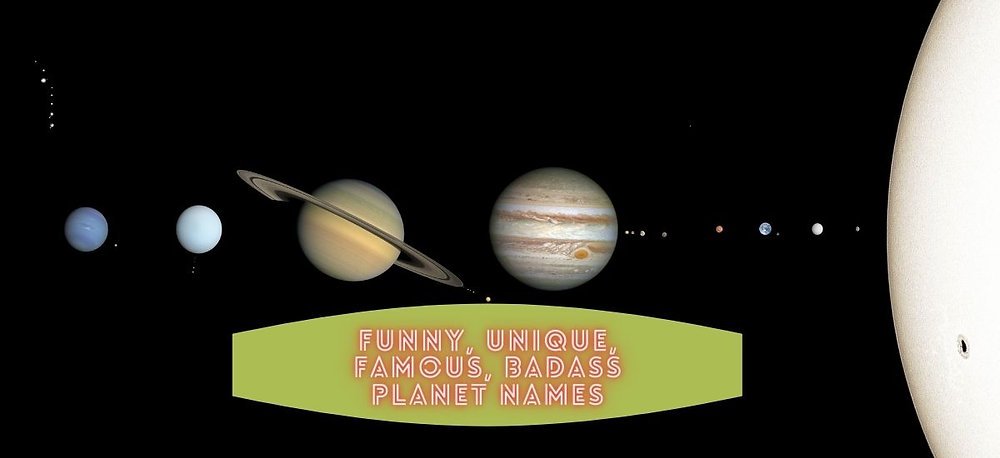
Imagine a sprawling galaxy, a realm of endless stars and untold stories. Now, picture a planet within it, a vibrant character in its own right. What's its name? Is it a bland, forgettable designation, or something that hums with the very essence of its existence? The most impactful fictional worlds understand this: Themed & Genre-Specific Planet Names aren't just labels; they're potent storytelling devices, the first whisper of a world's identity, and a critical anchor for your audience's imagination.
A well-chosen name does more than identify a location; it's a miniature narrative, a mood-setter, and a promise of adventure or peril. It hints at a planet's history, the nature of its inhabitants, its appearance, and even its role in the unfolding drama. This guide will help you master the art of crafting names that resonate, adding depth and intrigue to every corner of your universe.
At a Glance: Crafting Stellar Planet Names
- Names are Storytelling Gold: They evoke mood, hint at lore, and spark curiosity.
- Theme It Up: Align names with a planet's core features, atmosphere, or genre.
- Keep It Catchy: Prioritize pronounceability and memorability for your audience.
- Stand Out: Research to ensure your chosen name is unique and impactful.
- Test Drive: Say names aloud and imagine them in your story to check their fit.
- System Matters: Consider a broader naming convention for realism and depth.
- AI for Inspiration: Leverage smart tools to generate a wealth of creative options.
More Than Just a Label: Why Planet Names Are Worldbuilding Powerhouses
Think about the iconic planets that live rent-free in our collective imagination: Arrakis, Krypton, Tatooine. These aren't just names; they're immediate evocations of desert dunes, alien origins, and a rough-and-tumble frontier. The simple truth is, a powerful planet name does half the descriptive work for you. It's the cover of the book, the first impression, the sonic signature that lingers in a reader's mind.
A compelling name enhances storytelling by imbuing a location with personality. It can evoke feelings—adventure, tranquility, or foreboding—before a single word of description is read. It hints at a planet's history, whether ancient and scarred or newly born and pristine. It helps your audience imagine the world, creates immediate interest, and can even offer subtle clues about the narrative twists awaiting them. In essence, a planet name isn't merely a tag; it's an invitation to explore.
The Art of Themed Naming: Beyond the Generic
The real magic happens when you move beyond arbitrary syllables and tap into the power of themed and genre-specific naming. This approach ensures your planet's name isn't just unique, but meaningful, telling a story before the story even begins. By aligning the name with a planet's dominant characteristics, you create an immediate, visceral connection for your audience.
Let's break down how various themes can translate into unforgettable names:
Reflecting the Environment: Naming by Nature's Design
Many planets derive their identity from their dominant environmental features. Is it a world of perpetual twilight, endless deserts, or shimmering oceans? Let its name echo these traits.
- Astralis: For a world that shines brightly, perhaps due to unusual mineral deposits or a brilliant atmosphere, evoking "star-like."
- Novaterra: A classic for a newly discovered, Earth-like world, literally meaning "new Earth."
- Zephyria: Perfect for a planet characterized by gentle, constant winds, hinting at a serene yet dynamic atmosphere.
- Lumina: A beautiful choice for a world that emits its own light, perhaps bioluminescent flora or geological activity.
- Chronos: Suggests a place where time itself behaves differently, perhaps sped up, slowed down, or fractured.
- Nebula: Immediately tells you this planet is surrounded by colorful, swirling gas clouds, a visual spectacle.
- Helios: A scorching hot world, perhaps tidally locked to its star, bearing the name of the sun god.
- Galaxia: Implies a planet positioned at the very heart of a galaxy, a central hub of activity or observation.
- Nyx: For a world shrouded in perpetual darkness, named after the Greek goddess of night.
Unique Characteristics: Names That Highlight What Stands Out
Sometimes, a planet has one striking feature that defines it. Naming it after this characteristic makes it instantly memorable.
- Aeloria: A serene world of vast, tranquil oceans, a peaceful haven.
- Vektra: Conveys a metallic surface, hinting at industrial exploitation, ancient constructs, or natural mineral abundance.
- Cyris: A name suggesting a distinct visual identity, like a purple hue or swirling, exotic gases in its atmosphere.
- Xandor: Evokes a desert world, perhaps one holding ancient ruins, whispering tales of forgotten civilizations.
- Zoritha: A frozen expanse, characterized by icy canyons and extreme cold, a harsh but beautiful frontier.
- Ygora: A jungle planet where colossal floating mountains defy gravity, a place of wonder and danger.
The Whisper of Magic: Fantasy-Driven Planet Names
For worlds steeped in sorcery, ancient prophecies, and mythical beings, names should hum with enchantment and mystery.
- Eldoria: A classic fantasy name, implying a world where magic flows freely, deeply integrated into its very fabric.
- Valyssia: Suggests vibrant jungles and crystal caves, a realm of untamed beauty and hidden wonders.
- Drakara: Immediately brings to mind ancient dragons and magical forests, a world of power and primeval forces.
- Mythara: Where legends come alive, a planet saturated with epic tales and heroic sagas.
- Sylphira: Evokes floating islands and ethereal beings, a realm of delicate beauty and mystical inhabitants.
Grounded in Geology: Physical & Geological Names
Many worlds are defined by their rugged landscapes, their deep scars, or their unique geological formations. These names often sound sturdy, ancient, or formidable.
- Jivara: A world of vast oceans meeting rolling plains, suggesting a fertile yet expansive land.
- Quoneth: A barren land of deep canyons and ancient ruins, a place holding secrets beneath its harsh exterior.
- Xevon: A rocky planet, heavily cratered, speaking to a tumultuous past or constant bombardment.
- Kurnos: Dark, cold, and dominated by endless ice fields, a desolate and challenging environment.
Rings of Splendor: Naming Celestial Ornaments
Ringed planets possess a unique visual grandeur that their names can reflect.
- Satyrus: A name that immediately brings to mind magnificent golden rings, a truly breathtaking celestial body.
- Selarion: Evokes shimmering, ice-filled rings, a cold beauty orbiting its host world.
- Cirros: For a planet adorned with translucent, crystal-like rings, perhaps glimmering with unique properties.
Gleaming & Reflective: Worlds of Light and Mirror
Some planets dazzle with their luminosity, either reflecting their star's light or emanating their own.
- Luminara: A world where reflective oceans create a dazzling spectacle, a mirror to the heavens.
- Aurelia: Suggests dazzling, crystal-covered mountains, a planet glittering with natural gems.
- Xylara: A place where every surface gleams with a silvery sheen, perhaps metallic flora or unique geology.
Stellar & Bright: Names for Dazzling Worlds
For planets defined by their intense brightness or their connection to celestial bodies, names can be particularly radiant.
- Stellaris: A world filled with stars and nebulae, perhaps a celestial observatory or a place close to the galactic core.
- Vereon: Instantly signals a world orbiting twin suns, experiencing unique double-dawn and dusk cycles.
- Astraeus: Its sky filled with countless stars, a truly awe-inspiring cosmic vista.
- Pyrios: Radiates light from its intensely hot surface, a fiery, incandescent world.
By consciously aligning names with these themes, you’re not just labeling; you're describing and inviting your audience into the heart of your fictional universe.
Actionable Insights: Choosing Your Planet's Perfect Moniker
So, you have an idea of your planet, its core identity. Now, how do you distill all that into a singular, resonant name? It's a blend of art and strategy. Here's a practical framework to guide your decision-making:
1. Consider Key Features: Let the Planet Speak
What defines your planet? Is it an ocean world, a volcanic hellscape, a lush paradise, or a desolate wasteland? Jot down 3-5 keywords that describe its most unique attributes. These words are your starting point for inspiration. For a planet with vast, shimmering deserts, perhaps "Solara" (sun) or "Duneer" (desert-like). For a world of perpetual storms, "Tempestia" or "Aetheria." The name should ideally reflect these defining characteristics, giving an immediate hint to the reader about what kind of world they are encountering.
2. Convey Mood & Atmosphere: Set the Tone
Beyond physical features, what feeling do you want the planet to evoke? Adventure, tranquility, foreboding, mystery, ancient wisdom? A name like "Sanctuary" suggests peace, while "Mordor" (though a continent, not a planet) clearly communicates dread. Think about the emotional landscape of your planet. If it's a bustling trade hub, maybe something energetic. If it's a post-apocalyptic ruin, something somber or stark. This emotional resonance is crucial for drawing your audience deeper into your story.
3. Ensure Pronounceability & Memorability: Don't Trip Up Your Readers
This is often overlooked but incredibly important. A name that’s hard to say will interrupt the flow of reading and detach your audience from the story. Avoid overly complex consonant clusters, awkward vowel combinations, or names that are excessively long. The goal is for your readers to be able to "hear" the name clearly in their minds and recall it easily. Simple, elegant, and distinct often beats convoluted. Consider how quickly someone could read it aloud and remember it later.
4. Check for Uniqueness: Stand Apart in the Cosmos
The fictional universe is vast, and many names have been used before. Conduct a quick search online (or within your genre's popular works) to ensure your chosen name isn't already iconic or overly common. While it's impossible to guarantee absolute originality, you want to avoid confusion or accidental plagiarism. A unique name helps your world stand on its own, carving out its own niche in the reader's mind.
5. Test Aloud: Hear Your World Come to Life
Finally, say the name aloud. Does it roll off the tongue? Does it sound right when spoken by your characters? Visualize it within your story's narrative. Does "Welcome to Xylos!" have the same punch as "Welcome to Gorlock Prime!" in the context of your specific world? This auditory test is surprisingly effective for gauging how a name feels and whether it fits seamlessly into the narrative tapestry you're weaving. It’s a vital last step before committing.
Beyond Individual Names: Crafting Immersive Planetary Naming Systems
While a single compelling name is powerful, a truly immersive fictional world often benefits from a broader, consistent naming system. This isn't just about individual planets; it's about building a sense of history, culture, and logical order across your star systems. It adds a layer of realism and depth that can make your universe feel lived-in and authentic.
Cultural Influence: A Language Echoes Its People
For inhabited planets, their names can—and often should—reflect the dominant culture's language, history, and values.
- Example: If you have an ancient, spiritual civilization, their planets might have names derived from old myths, philosophical concepts, or sacred texts (e.g., "Aethelgard" for a world valued for its ancient wisdom). A technologically advanced, expansionist empire might favor names that convey power, conquest, or scientific achievement (e.g., "Dominus Prime" or "Astraea-VII"). This approach subtly tells a story about the people who named the world.
Astronomical Designation: The Scientific Touch
For realistic or hard sci-fi settings, incorporating a systematic identifier alongside an evocative name lends immediate credibility. Real-world astronomy uses alphanumeric designations (e.g., Kepler-186f). You can adapt this for your fictional universe.
- Example: A planet might have a common, cultural name like "Aeloria" (the serene ocean world), but its official designation in scientific logs could be "Proxima-7, Sector Beta-IX." This dual naming convention reflects how real astronomical bodies are named, balancing scientific rigor with human connection. It implies a larger, organized universe with a classification system.
Physical/Historical Attributes: Names as Living Records
Names can be inspired by significant historical events, dominant geological features, or even resource abundance. This turns names into mnemonic devices, conveying information with every mention.
- Example: A planet named "Ferrus Prime" immediately tells you it's an iron-rich world, likely exploited for its metals. "Crimson Reach" might signify a historical battle or a planet known for its red geological features. "Whisperwind" could be named for a notable storm or unique atmospheric phenomenon. These names aren't arbitrary; they're echoes of a world's past or its defining present.
Developing such a system allows for consistency and deeper worldbuilding. It makes your universe feel thought-out, giving each name a context that extends beyond its mere sound.
Leveraging Technology: The Power of AI Planet Name Generators
Let's be honest: crafting original, pronounceable, fitting, and impactful names, sometimes by the dozen, is a monumental challenge. This is where modern tools, particularly AI-driven generators, become invaluable. They don't replace your creativity, but they supercharge it.
Planet name generators are potent allies in the worldbuilding process. They excel at conjuring unique and fitting names for fictional worlds, covering everything from high fantasy realms to gritty sci-fi outposts and scientifically plausible celestial bodies. Need a name for a hostile desert planet? A mystical forest moon? A bustling trade hub? An AI can offer a spectrum of options.
Why AI Generators Matter for Worldbuilders
- Time-Saving: Instead of agonizing for hours over a single name, you can generate dozens of possibilities in moments.
- Creativity Boost: AI can suggest combinations and concepts you might never have considered, breaking through creative blocks.
- Evocative & Original: They’re designed to produce names that spark imagination and sound fresh.
- Pronounceable & Fitting: Good generators often incorporate linguistic principles to ensure names are user-friendly and align with your specified criteria.
- Intriguing Descriptions: Many advanced generators provide brief descriptions explaining the meaning or relevance of a generated name to a planet's characteristics, offering immediate hooks for your storytelling.
This guide, in fact, draws inspiration from the very principles that power these innovative tools. If you're ready to explore a universe of possibilities and save countless hours in your worldbuilding journey, you can Generate unique planet names with an AI-powered tool.
How the AI Planet Name Generator Works (The Science of Naming)
Behind the scenes, the described Planet Name Generator, often powered by advanced models like Google's Gemini API, employs sophisticated techniques to deliver its results. It's not just randomly mashing keys; it's a finely tuned engine of creativity.
- Vast Training Data: These models are trained on an enormous dataset. This includes:
- Real and Fictional Planet Names: Learning patterns, sounds, and structures from existing worlds.
- Languages and Etymology: Understanding roots, prefixes, suffixes, and how different cultures name places.
- Geological and Astronomical Terminology: Incorporating scientific vocabulary for plausible names.
- Cultural and Mythological References: Drawing on rich narrative traditions for evocative, fantasy-leaning options.
- Sophisticated Techniques: The AI utilizes several key mechanisms:
- Transformer Networks: These neural network architectures are excellent at understanding context and relationships between words, ensuring generated names fit specific themes.
- Natural Language Processing (NLP): NLP allows the AI to analyze your input parameters (e.g., "icy planet," "jungle world") and tailor its output accordingly.
- Probabilistic Modeling: The AI calculates the likelihood of certain letter combinations, word structures, and semantic associations to generate names that sound authentic and meaningful.
By fine-tuning these models specifically for planet name generation, the AI learns the underlying principles of what makes a name "good" within various genres. It can then apply these principles creatively to generate original, evocative, and authentic names based on your specific input, transforming a daunting task into an inspiring one.
Avoiding Common Pitfalls in Planet Naming
Even with the best intentions and powerful tools, it's easy to stumble into common naming traps. Being aware of these can save you from future headaches and ensure your planet names truly shine.
1. The "Too Similar" Trap
Imagine a universe with planets named "Xylar," "Xylos," and "Xylene." While each might be unique on its own, their proximity in sound can cause immediate confusion for readers. Avoid names that sound too much like other important locations or characters in your story. This is particularly true if your saga features multiple planets that characters will visit frequently. Distinguish them clearly.
2. The "Unpronounceable Mess"
As mentioned earlier, a name riddled with apostrophes, hyphens, or unusual letter combinations that defy common phonetic rules is a barrier. While some complex names can add an alien flavor, a string of unpronounceable letters is simply frustrating. If you struggle to say it, your reader definitely will. Prioritize ease of pronunciation for key planets.
3. The "Nonsensical Name"
Sometimes, a name sounds cool but has absolutely no connection to the planet's characteristics, mood, or cultural context. A planet named "Whisperwind" that is actually a scorching, silent desert world creates a jarring disconnect. While you don't need to be literal, there should be some thematic resonance. Names should enhance, not contradict, the planet's identity.
4. The "Generic Filler"
If your planet is just "Desert Planet 1" or "Forest World," your naming isn't doing its job. Names like "Aridus" (Latin for dry) or "Veridia" (Latin for green) are immediate upgrades, but even better are names that evoke more specific imagery or lore, such as "Crimson Waste" or "The Verdant Labyrinth." Challenge yourself to move beyond the obvious descriptive labels.
5. Over-Reliance on Gimmicks
A name that’s purely a joke or too on-the-nose can pull readers out of your story. While a clever pun might be fun for a minor, one-off location, it rarely serves a major planetary body well. Similarly, avoiding an excessive number of exotic characters (like too many "X"s, "Z"s, or apostrophes) keeps your names grounded enough to feel believable.
By consciously navigating these common pitfalls, you can ensure your planet names remain assets, not liabilities, in your worldbuilding toolkit.
A Universe of Inspiration: Tapping into Diverse Sources
Beyond generators and structured systems, a truly creative approach to naming draws from a wealth of diverse sources. Think of yourself as a linguistic archaeologist, digging up fragments of meaning and sound to forge something new.
- Mythology and Folklore: Ancient pantheons, mythical beasts, and legendary places from cultures around the world are an endless wellspring. "Prometheus" for a world of defiant ambition, "Elysium" for a paradise, "Tartarus" for a hellscape.
- Real-World Geography and Linguistics: The sounds and structures of actual languages can provide incredible inspiration. Look at names of obscure mountains, rivers, or historical cities. Deconstruct words into their phonetic components. Even playing with existing words—swapping letters, adding suffixes—can yield evocative results.
- Scientific and Astronomical Terminology: For hard sci-fi, leaning into scientific terms can add authenticity. "Aether," "Nebula," "Pulsar," "Quasar," "Titan"—these words already carry weight and cosmic significance. Look up geological formations, atmospheric phenomena, or star classifications for unique ideas.
- Historical Figures and Events: Naming a planet after a revered explorer, a pivotal battle, or a revolutionary idea can inject layers of backstory and meaning. This works particularly well for culturally influenced naming systems.
- Personal Connections & Emotions: Sometimes, the most powerful names come from a personal feeling, a memory, or an abstract concept you want to embody. What does "hope" sound like in an alien tongue? What about "despair" or "joy"?
Don't be afraid to combine elements. Take a mythological creature, merge it with a geological term, and add a linguistic twist. The goal is to discover names that feel fresh, yet resonate with a deep, underlying meaning relevant to your world.
The Iterative Process: Refining Your Planet Names
Naming is rarely a "one-and-done" task. It's an iterative process, much like writing itself. The first name you choose might be a placeholder, a starting point. As your story develops, as characters interact with the planet, and as its lore deepens, you might find the initial name no longer fits as perfectly as you once thought.
- Embrace Evolution: Be open to changing a planet's name if a better one presents itself later in your writing process. A name you thought was brilliant in isolation might feel clunky within a scene.
- Seek Feedback: Share your names with trusted readers or fellow worldbuilders. Do they understand the implied meaning? Is it pronounceable? Does it evoke the right mood? Fresh eyes and ears can catch issues you've become blind to.
- Read Aloud in Context: Don't just test the name in isolation. Read paragraphs or entire scenes where the planet name appears frequently. Does it flow well? Does it add to the narrative or distract from it?
- Let the Story Inform the Name: Sometimes, the story itself will reveal the perfect name. A planet that becomes central to a conflict might earn a more dramatic name, while one discovered to hold a hidden power might get a more mystical one.
Ultimately, the best planet names are those that grow with your story, becoming as integral and memorable as your characters themselves.
Charting Your Course Through the Cosmos
Naming fictional planets is more than a creative exercise; it's a strategic act of worldbuilding that profoundly impacts your audience's experience. From the grand, sweeping vistas of "Stellaris" to the ancient, foreboding canyons of "Quoneth," each name is an opportunity to deepen your narrative and transport your readers to places they've only dreamed of.
By embracing themed and genre-specific approaches, considering the core characteristics and mood of your worlds, and leveraging both traditional inspiration and advanced AI tools, you can craft names that truly elevate your storytelling. So, take these insights, open your mind to the infinite possibilities, and start populating your cosmos with worlds as rich and compelling as the stories that unfold upon them. The universe of your imagination awaits its names.